Cavett students ace AI adventures during new computer science lesson
January 9, 2026
Maci’s face lit up with joy as she watched a cheese-writing pepperoni pizza pen appear on her computer screen at Cavett Elementary School.
The first-of-its-kind writing device was one of many creative ideas that Maci and fellow fifth graders came up with during a new computer science lesson. They experimented with a generative artificial intelligence (AI) tool during the Hour of AI project at Cavett. It was the first time the Cardinals worked with the emerging technology in their computer classroom.
Maci said it was fun to build the picture of her pen, which contained several pepperonis in the body and had cheese dripping down the sides. When she listened to instructions for the AI project, she wondered if she could combine food and writing into her image. She was pleasantly surprised when the AI program began to turn her pizza-themed vision into digital reality.
“I thought it would kind of look like a cartoon, but it looked a lot more realistic than I had thought,” Maci said.


Carrie Copley, a computer science teacher and elementary technology leader at Cavett, felt the AI session had been a resounding success. She said it had been hard to sleep the night before because she was excited about introducing the topic to students. Her enthusiasm soared even more after watching the Cardinals make everything from snowcapped mansions to ice-tipped baseball bats.
“I’m excited to teach it again and take what I learned from this group and make it even better,” Copley said. “They were so creative. I was very impressed with the things they thought to put together, like the cheese and the pen. A pen that writes with cheese? I would have never thought of that, so it was really neat to see.”
Copley said it was important to teach students about the expanding reach of AI in society. AI has been integrated into various technologies for many decades, but it has become more sophisticated over the past several years. Computers, televisions and smartphones are now featuring AI services that were only part of the science fiction world when Cavett’s fifth graders were born.
“It’s a part of their lives that they don’t even realize yet,” Copley said. “They are already talking to Alexa and they’re already using things that are AI-generated, but they don’t realize it. If it’s going to become a part of their life that they can leverage for themselves, I want them to have the skills to not be afraid to use it and try to figure it out.”


Copley began her lesson by explaining the basics of AI to students. She told the Cardinals that she wanted them to utilize the technology to become creators, rather than just consumers. She said going through the creative process would help them work on key skills like critical thinking, problem solving and following directions.
Copley asked each student to write prompts into the AI program based on a common formula. They could choose traditional objects like soccer balls, sunglasses or sneakers and then add an unexpected twist to them. Some of the possibilities included turning their object into transparent glass, placing it on a coral reef or covering it with tree bark, moss or flowers.
The Cardinals spent several minutes thinking about things they could create with AI, and they pitched their ideas to a partner at their table. They then dove into their AI project’s pool with the enthusiasm of an Olympic swimmer.
“It was just an energy in the room where they were so excited to get going and try it,” Copley said. “Even though it was the first time they’d done it, they kept trying, and I was really proud of them for that. I was proud of them for giving good effort.”
Wes developed an image of a person painting graffiti on a wall in California. He said he had always wanted to travel to the West Coast, and having seen graffiti on many Nebraska trains, he decided to combine those two ideas. He said he learned a lot from testing different prompts throughout the class period.
“It was hard to find exactly the words that matched what you were wanting to see in your head,” Wes said. “There was an image that I really wanted to have AI create, but it was hard to put it into words at first. I think it turned out really well though.”
After the Cardinals finished their rough drafts, they walked around the room to see everyone else’s creations. Maci said it was fun to discover new ideas during the tour.
“It was really cool walking around, because I feel like everybody chose really creative things,” Maci said. “It was cool to see what people thought of. Like, my partner’s prompts were different than what I would have thought of, so I got to learn from that.”
Copley plans to teach AI lessons to all Cavett fifth graders and will present a simplified version to fourth graders. That was music to the ears of Wes, who said he would like to come up with additional AI creations in his spare time.
“I’d like to do this more,” Wes said. “I’m probably going to download it and try it more at home.”
Discover more about computer science at Lincoln Public Schools. Interested in the skills your student is learning? Dive into our K-12 computer science curriculum.
Do you have a story idea? Share it with the LPS Communications Team by filling out this form!
Published: January 9, 2026, Updated: January 9, 2026
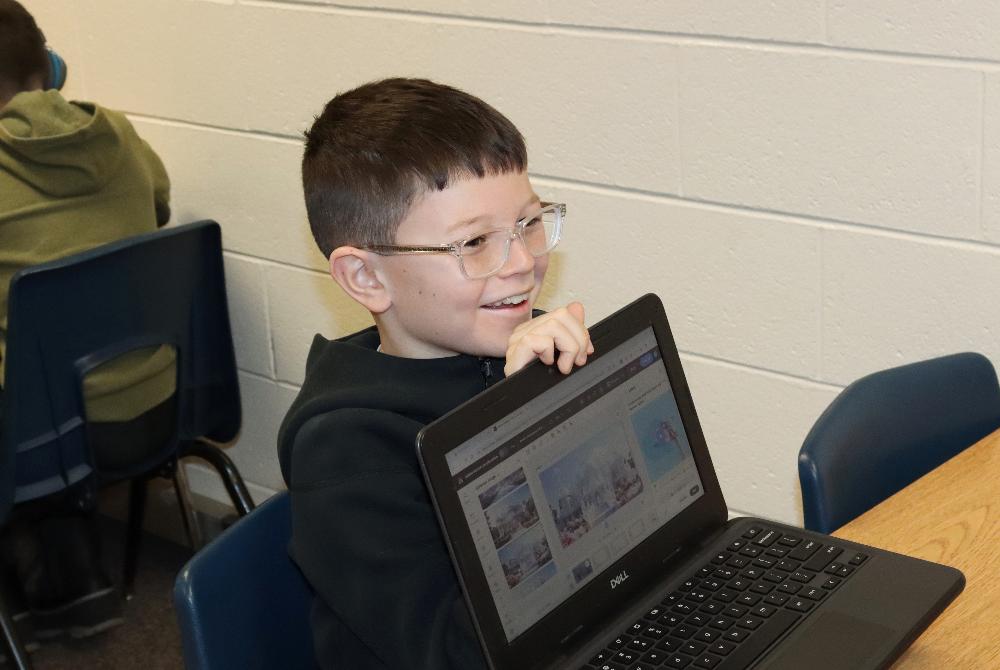
A Cavett Elementary School fifth grader smiles as he displays his project on a computer screen. Cavett students wore many smiles this fall when they experimented with a generative artificial intelligence program in a computer science class. They wrote prompts into the AI program to create unique twists on traditional objects like soccer balls, sunglasses or sneakers. The Cardinals said they enjoyed the educational activity.